|
What is a Pastor? What a Pastor Should be.
| The word “pastor” is
not often used in the King James Bible. More often the word “poimen” is
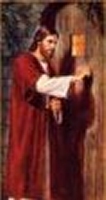
used and is translated “shepherd”. This image is often illustrated
graphically with pictures of Jesus holding a lamb. While creating a
pleasant emotional picture of our relationship with Jesus it is more
accurate to think of a pastor as a teacher more than a shepherd. (Eph
4:11, 1Tim 3:2).
It is difficult to draw out from the Greek a greater understanding of
what is meant by “teaching” as they also had classroom instruction as
well as apprenticeship instruction. Up until 100 years ago most
instruction in the world followed the apprentice model. However, in the
modern world most are only familiar with the classroom instruction of
public school and the sermon lecture of Sunday morning church. The
classroom model of teaching has the advantage of efficiency, but lacks
the relational context, depth, and applicability of personal
instruction.
Francis Chan once described a former gang member who had joined his
church after accepting Jesus only to quit a few months later. When
asked why he was quitting he said that he didn’t know that Christianity
was just something you did on Sunday mornings. He had thought it was
like joining a gang (more family-like). Pastors today largely
administer organizational systems for consistency and organizational
efficiency. They come out of seminary (four years of classroom
instruction) with having become committed to denominational doctrine
enforcement.
Young seminary graduates are usually hired to be a youth pastor and
after a few years seek an assistant pastor position. In time, they can
apply for a head pastor position. By then they are usually able to
administer an ongoing church system with little danger of anything
being questioned or changed. If one considers that the purpose of a
pastor is to help each church member become like Christ (Eph 4:13), one
can only conclude that the way Christianity is practiced today, pastors
are complete failures. This is because from their schooling onwards
they have been set on a trajectory to keep a failing system from
changing.
There is such inertial momentum built into most church systems that few
pastors even know that they are supposed to teach their members to be
like Christ much less how to do it. To be honest most church members
would object and even fire a pastor who tried to follow this biblical
objective. In a way pastors are often also prisoners of the system they
administer. A pastor is supposed to be mature and able to teach others
how to be mature. Maturity is not simply seniority, but rather
Christ-likeness.
Christ-likeness is simply selflessness. A pastor can appear to
sacrifice himself to keep a church system operating and still not be
like Christ. If one is fearful upsetting the apple cart, desirous of
accolades, prideful of diligence, or comfortably complacent with
conformity, the church members may be still left in the flesh and not
have gained much in their faith.
Sermons, events, classes, programs, and other scripted activities are
not a substitute for growth. They can even inhibit growth. Helping each
Christian learn to turn his attention from the consumptive consumerism
of self outward to the conscious consideration of his fellow Christians
and their needs should be the second priority of a Pastor. The first
priority is for his own focus to be away from self towards others. |
|
|